How we scope lab work
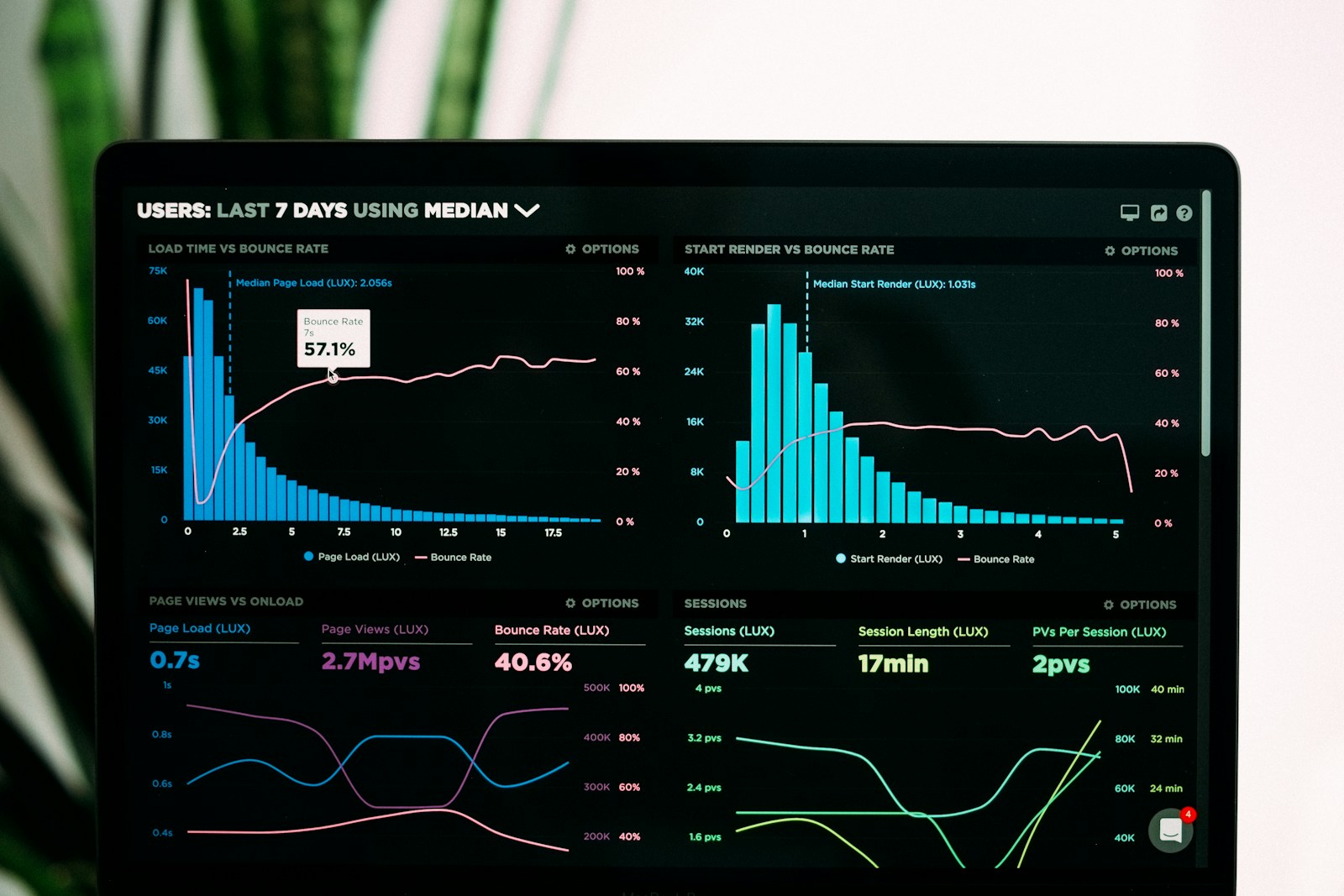
You bring a capability question — can this arm pick these pouches, can this AMR read these pallets at dusk, can this policy survive contact variance. We respond with a written frame: hypotheses, hardware needs, simulation plan, evaluation metrics and safety boundaries. CAD budgets are indicative; final quotes follow a discovery call.
Perception & Computer-Vision Models
Industrial vision fails in ways slide decks ignore: specular weld seams, motion blur on a vibrating conveyor, dust that arrives every November. Our perception team builds computer-vision models and sensor-fusion stacks — RGB-D, LiDAR, structured light — trained on your parts or faithful sim proxies. We document edge-inference latency on target hardware, run ablation on augmentation choices and test under controlled lighting shifts before anyone claims production readiness. Human operators review failure galleries; autonomous mobile robot and fixed-arm integrations share the same evaluation harness. Functional safety and guarding assumptions are recorded alongside mAP and confusion matrices. Typical perception pilot: C$18,000–C$35,000 depending on sensor count and field visits.
Indicative: C$18,000–C$35,000 · 6–10 weeks
Manipulation & Grasping Research
Grasping research starts with the part, not the algorithm. We characterize mass, compliance, surface finish and allowable contact force, then prototype grasp strategies on bench arms — parallel jaw, vacuum, soft tooling — with kinematics and path planning tuned for your clearance envelope. Pick-and-place in cluttered bins receives staged trials: isolated grasps, then structured clutter, then operator-supervised live runs. We report success rates with confidence intervals, not cherry-picked clips. Collaborative robot workflows include ISO 10218 / ISO/TS 15066 awareness and force-limiting checks where applicable. If a gripper crushes one in fifty parts, we say so. Typical manipulation study: C$22,000–C$48,000.
Indicative: C$22,000–C$48,000 · 8–14 weeks
Reinforcement / Imitation Learning
Learning policies look elegant in TensorBoard and fragile on tile floors. We design reinforcement learning and imitation learning experiments with explicit sim-to-real transfer steps: domain randomization budgets, teleoperation data collection protocols and rollback criteria when reward hacking appears. ROS 2 integration keeps policies inspectable; real-time control loops are profiled before unattended runs. Operators remain in the loop for every hardware episode early on; autonomy ramps only when evaluation gates pass. We do not promise sample efficiency or zero-shot deployment. Multi-month learning retainer from C$45,000; focused policy prototype from C$28,000.
Indicative: C$28,000–C$65,000 · 10–20 weeks
Simulation & Sim-to-Real (Digital Twin)
Simulation saves money until it hides the wrong physics. We build digital-twin environments that mirror your cell layout, tooling and sensor mounts — then stress-test where contact models, friction and latency lie. Sim hours are logged; hardware trials are scheduled when metrics plateau, not when a demo date looms. Transfer reports explain which randomization dimensions helped and which failure modes remain. This discipline pairs with perception and manipulation engagements or stands alone for feasibility studies. Embodied AI teams use the same pipeline to compare policy candidates before committing to shop-floor pilots. Digital-twin foundation: C$15,000–C$32,000.
Indicative: C$15,000–C$32,000 · 4–8 weeks
Embodied AI & Autonomy Prototyping
Autonomy means different things to different boards. We prototype embodied AI behaviours — local planning, semantic mapping, task-level state machines — scoped to environments you control, with clear human-robot collaboration boundaries. SLAM stacks, edge inference and teleoperation fallbacks are wired together in ROS 2 with logging suitable for post-incident review. Risk assessment documentation references CSA expectations and your site rules; we do not certify your line. Autonomous mobile robot perception stacks and manipulator autonomy share evaluation rubrics: predictable stops, handover procedures, geofencing. Nothing ships as fully autonomous without your explicit acceptance testing. Autonomy prototype: C$35,000–C$72,000.
Indicative: C$35,000–C$72,000 · 12–24 weeks
Teleoperation Safety & Evaluation
Before autonomy expands, teleoperation must be trustworthy. We design operator interfaces, latency budgets and safety interlocks for remote manipulation and AMR supervision — then evaluate them with structured trials. Functional safety concepts, e-stop paths and mode switching are tested with your operators in the loop. Quantitative evaluation covers task completion, near-miss logging and recovery time; qualitative notes capture where UI friction invites mistakes. Reports are suitable for internal safety review, not regulatory sign-off on their own. Evaluation sprints from C$12,000; combined teleop + learning programmes priced jointly.
Indicative: C$12,000–C$28,000 · 3–8 weeks
Late-session iteration
Our Vancouver lab runs parallel sim and bench sessions so your team receives weekly evidence, not a reveal-day video. Retainers include standing sim hours and a reserved hardware slot.
Our robotics R&D lab prototypes AI-powered perception, learning and manipulation for organizations, with qualified engineers and human operators in the loop. Robotic and AI systems are probabilistic; they act in an unforgiving physical world and can err. Nothing is fully autonomous or perfectly safe. Every hardware test requires site-specific risk assessment, functional-safety measures, guarding and trained operators, and compliance with applicable standards (ISO 10218 / ISO/TS 15066, CSA) and local regulations. We are honest about the sim-to-real gap — simulation success does not guarantee field performance. We do not guarantee uptime, throughput, cycle time, zero defects, cost savings or any specific outcome. We do not build autonomous weapons, lethal systems, or tools for unlawful surveillance. Samples and figures reflect past illustrative work, not promises of future performance. This is a professional robotics-engineering services firm — not engineering, legal or safety-certification advice — and we do not buy or sell personal data.
Bring us a robotics challenge